
What we’ve learned, so you don’t have to.
The Standard
Years of competitions, cafés, and conversations with people who brew for a living. The Standard is everything we’ve picked up, written plainly and shared freely. Start anywhere.
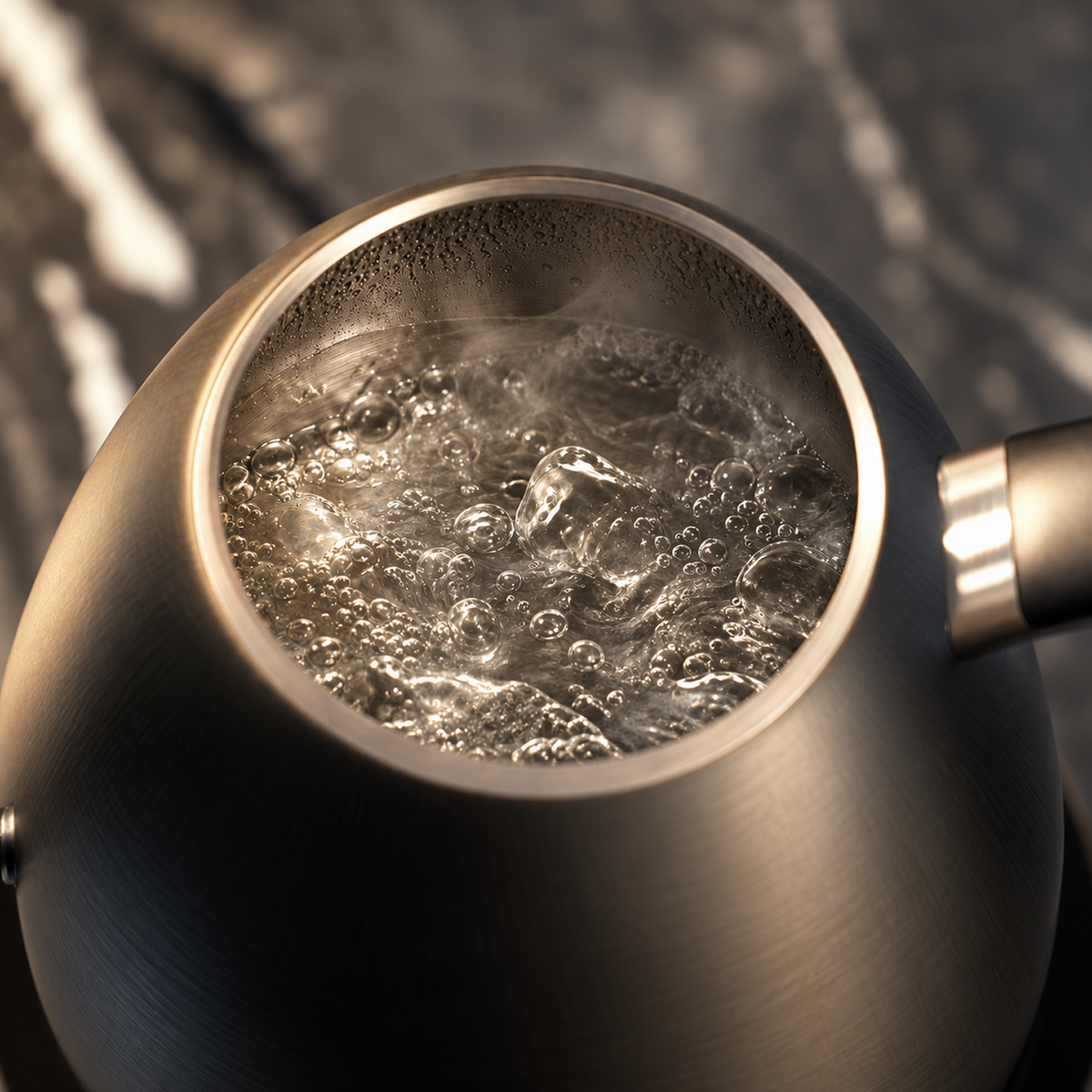
Heat
Why light roasts want hotter water.
Most brewing advice gives you one temperature. The people who brew coffee for a living don't use one. They change it every time the roast changes, and the reason is simpler than it sounds.
Roasting is cooking. The longer a bean roasts, the more its structure breaks down: drier, more brittle, more porous. A dark roast gives up its flavor easily. A light roast holds on to it.
That's the whole logic. Heat is how hard you pull. A light roast is dense and barely cooked, so it needs water close to boiling to give anything up. Brew it too cool and the cup comes out thin and sour, like fruit picked early.
A dark roast is the opposite. It's already opened up, so near-boiling water pulls too much, too fast, and you taste it as bitterness and ash. Bring the water down and the same coffee turns rounder and sweeter. Medium roasts sit in the middle, which is why most one-size recipes work best for them.
There's one more thing competition brewers account for: water starts cooling the moment it leaves the kettle. By the time it reaches the coffee bed, it has already lost a few degrees, more in a cold kitchen or with a slow pour. So when a recipe calls for a high temperature, it means at the kettle. Set it there and pour without hesitating.
How to use this at home: start with the range for your roast below and brew once. If the cup tastes sour or hollow, go up two or three degrees. If it tastes bitter or dry, come down. Change the temperature and nothing else, so you know what made the difference.
Once you find the number, write it on the bag. Next time, you start there.
The Numbers
Light roast: 205–210°F (96–99°C)
Medium roast: 198–204°F (92–95°C)
Dark roast: 185–195°F (85–90°C)
Dose: 15 g coffee to 250 g water
Grind: medium-fine, like table salt
Total time: about 3 minutes
Adjust: sour, go hotter. Bitter, go cooler. Two or three degrees at a time.
At altitude, water boils lower. In Denver it tops out around 202°F, so light roasts get the hottest water you can reach.
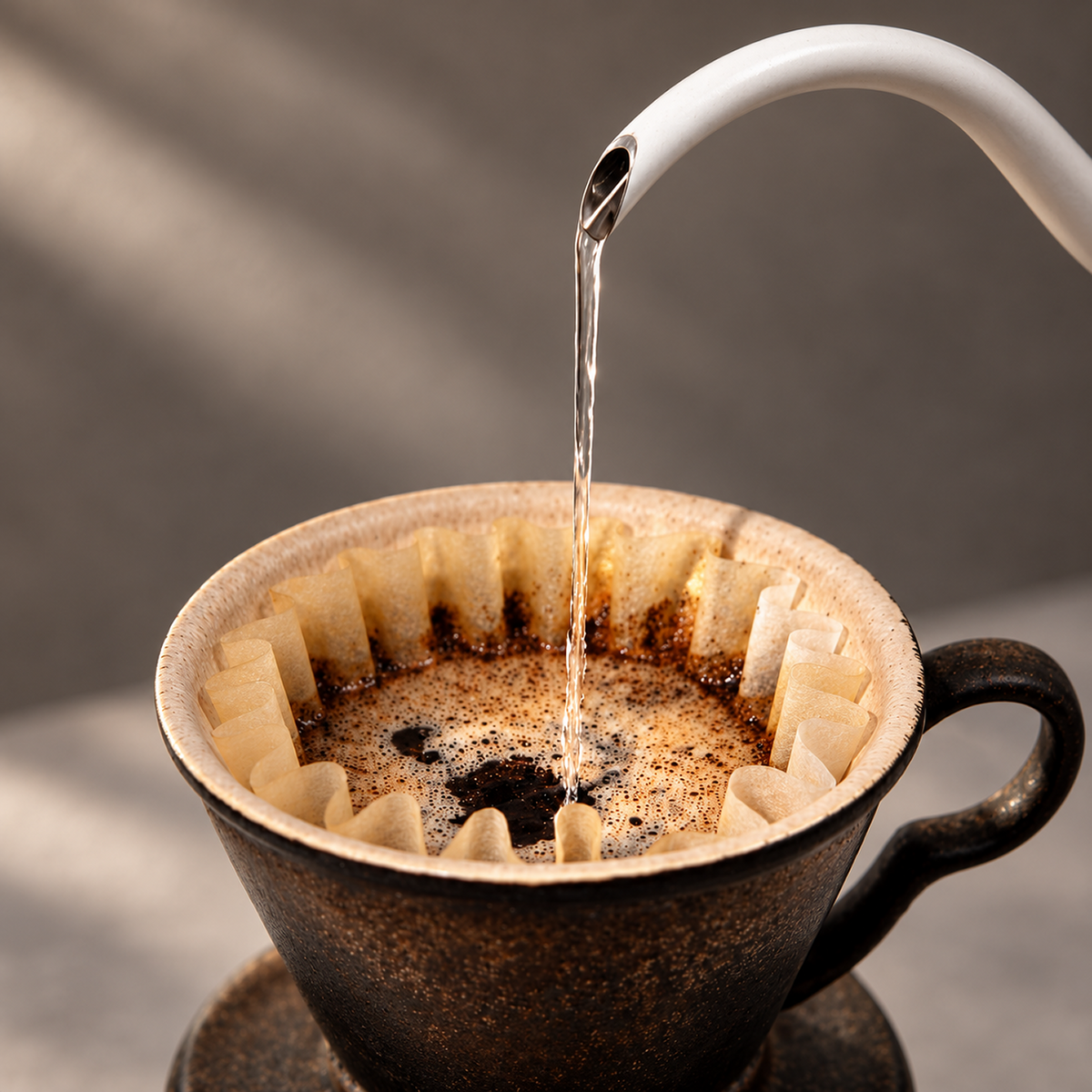
Pour
Why the first 30 seconds decide the cup.
The first pour isn’t really brewing. It’s getting the coffee ready to be brewed, and it’s the step that gets skipped the most.
Freshly roasted coffee is full of carbon dioxide, left over from roasting. When hot water hits the grounds, that gas rushes out. You can watch it happen: the bed puffs up and bubbles, sometimes into a little dome. That’s the bloom.
The gas matters because it pushes water away. Pour everything at once and some of the coffee stays dry while the rest gets too much. The cup comes out uneven, a little sour and a little bitter at the same time.
So start small. Pour just enough water to wet all the grounds, about twice the weight of the coffee, then wait. Thirty to forty-five seconds lets most of the gas escape. If you see dry spots, give the brewer a gentle swirl.
After that, the coffee takes water evenly, and the rest of the pour gets to do its job.
The bloom tells you one more thing: how fresh your coffee is. A big, lively rise means it was roasted recently. If it barely moves, the beans have been sitting a while. They’ll still brew, they just have less to give.
Want to taste the difference? Brew the same coffee twice, once with the bloom and once without, and try them side by side. One round is usually all it takes.
The Numbers
Bloom water: about twice the coffee’s weight (30 g for 15 g of coffee)
Wait: 30–45 seconds
Then: pour in slow circles from the center out, up to 250 g total
Total time: about 3 minutes
Dry spots: a gentle swirl
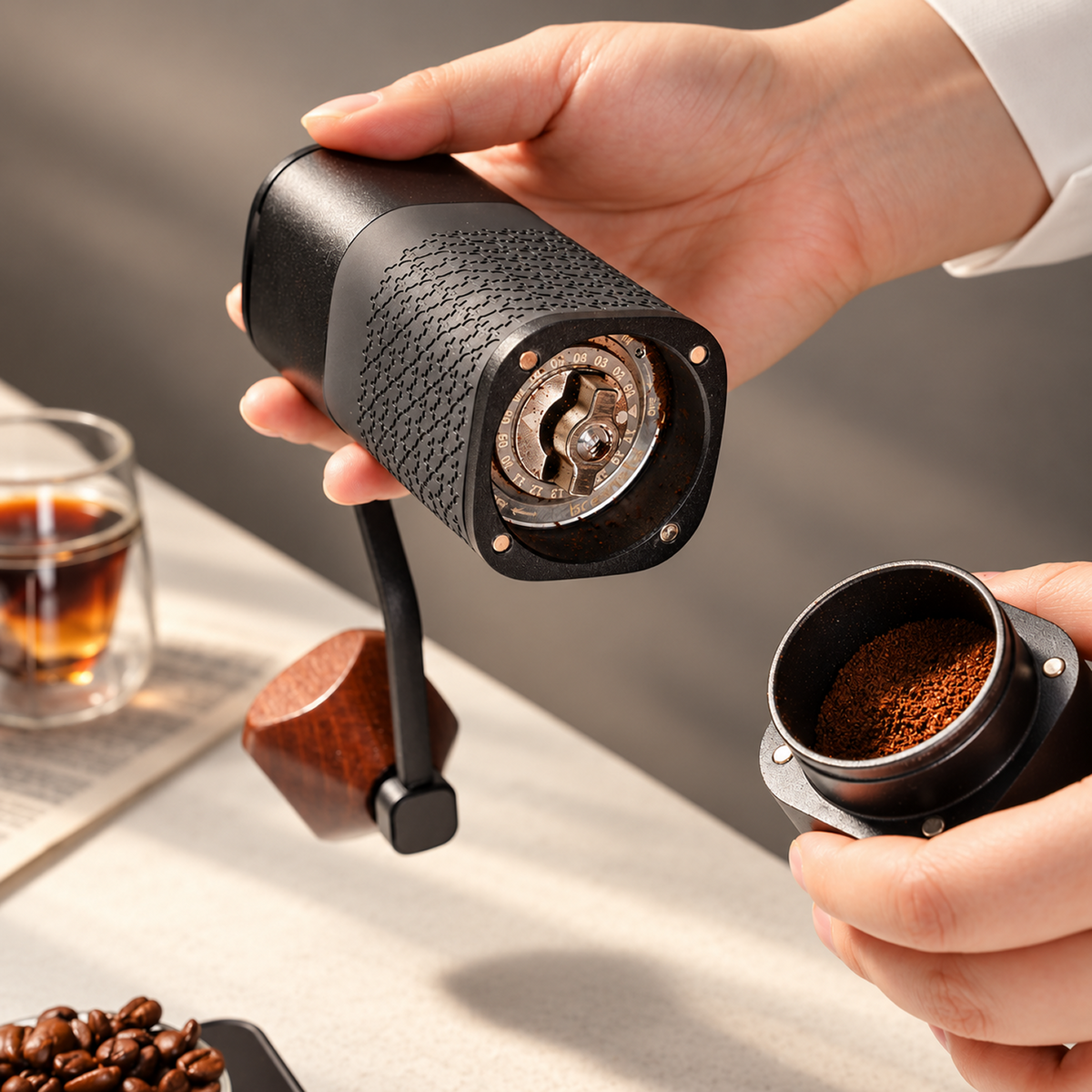
Grind
Why grind matters more than anything else.
If heat is how hard you pull flavor out of coffee, grind is how much coffee you give the water to pull from. Of everything you can adjust in a pour-over, it makes the biggest difference.
Here’s why. Water only works on the surface of each ground. Fine grounds have a lot of surface, so flavor comes out quickly. Coarse grounds have less, so it comes out slower. Grind also sets how fast water drains: fine slows it down, coarse lets it rush through.
Get it right and the cup tastes sweet and balanced. Too coarse and the water runs through before it’s done its job, so the cup tastes thin and sour. Too fine and it lingers too long, pulling out the harsh stuff, so the cup turns bitter and dry.
Your timer is the best clue. With the recipe below, a good brew usually finishes around three minutes. Much faster, go finer. Much slower, go coarser. Then let your taste have the final word.
Pros call this dialing in, and it’s less mysterious than it sounds. Change the grind a little at a time, and change nothing else. Every bag of coffee is a little different, so expect to adjust when you open a new one. Two or three brews is usually all it takes.
One more thing: evenness matters as much as size. A blade grinder chops beans into a mix of dust and chunks, so the same cup ends up sour and bitter at once. A burr grinder makes pieces close to the same size, and that’s what lets every other step work. If you upgrade one thing, make it this.
And grind right before you brew. Ground coffee loses its aroma fast.
The Numbers
Start: medium-fine, like table salt
Dose: 15 g coffee to 250 g water
Target time: about 3 minutes, bloom included
Too fast or sour: go finer
Too slow or bitter: go coarser
Step size: one or two clicks at a time
Every grinder’s numbers are different, so go by texture and time.

Ratio
Why we weigh coffee instead of scooping it.
A scoop measures space, not coffee. Beans change density as they roast, so a scoop of one coffee can weigh noticeably more than a scoop of another. Same scoop, different cup, and no way to tell why.
A kitchen scale fixes that. Weigh the coffee, weigh the water, and you’re working with a ratio: how much water for every gram of coffee. Most people who brew for a living start around 1 to 16. That’s 15 grams of coffee to 250 grams of water, the recipe used throughout The Standard.
Here’s the useful part. Ratio controls strength, how much coffee is in the cup. Grind and heat control extraction, how much flavor you pulled out. They taste different. A cup that’s weak and watery but otherwise pleasant needs more coffee. A cup that’s sour or bitter needs a grind or temperature change, not a bigger dose.
Knowing which is which saves a lot of guessing. Change the ratio to make coffee stronger or lighter. Change everything else to make it taste right.
You don’t need anything fancy. Any scale that reads in single grams will do, and one with a built-in timer makes every other step in The Standard easier. Weigh your water too: one gram of water is one milliliter, so the scale does the measuring cup’s job better.
The Numbers
Start: 1:16, or 15 g coffee to 250 g water
Stronger: 1:15
Lighter: 1:17
Scaling up: multiply your coffee weight by 16 for the water
Weak but pleasant: add coffee
Sour or bitter: see Grind and Heat
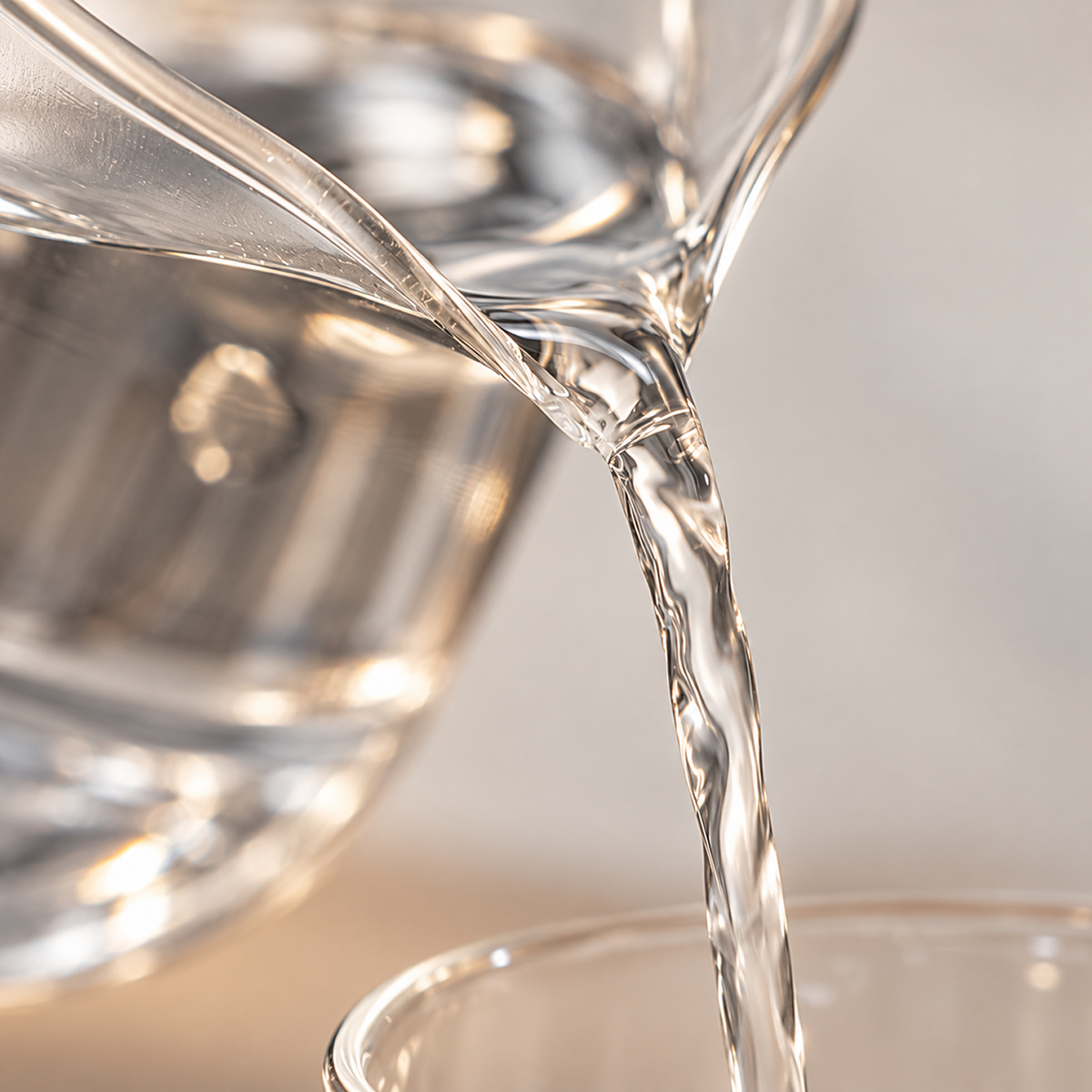
Water
Why your water matters more than you think.
A cup of coffee is about 98 percent water. Change the water and you change the coffee, even when everything else stays exactly the same.
The minerals in water do real work. Magnesium and calcium help pull flavor out of the grounds, which is why coffee brewed with distilled water tastes flat and empty. Go too far the other way, the hard water that leaves white crust in your kettle, and flavors turn muted and chalky.
What you want sits in the middle: clean, filtered water with a little mineral left in it.
The simplest test is your own taste. If your tap water tastes good on its own, you’re most of the way there. If it tastes of chlorine or anything else, a basic carbon filter pitcher handles most of it.
Want proof? Brew the same coffee twice, once with your tap water and once with filtered, and taste them side by side. People are usually surprised how big the difference is.
One more thing: hard water leaves scale inside your kettle over time, and scale changes how it heats. When you see white buildup, descale it following your kettle’s care instructions. It keeps the water, and the kettle, working the way they should.
The Numbers
Coffee is: about 98% water
Aim for: filtered water that tastes clean on its own
Skip: distilled (flat) and very hard water (chalky)
If you test it: around 150 ppm total dissolved solids
Descale: whenever you see white buildup
Taste
How to taste coffee like a judge.
Here’s the good news: tasting coffee well isn’t a gift. It’s a habit, and everyone who does it for a living started exactly where you are.
Coffee buyers use a simple method called cupping to compare coffees fairly. No pour technique, no special brewer, just ground coffee, hot water, and a spoon. Because every cup is made the same way, the only thing left to taste is the coffee itself.
It goes like this. Put the grounds in a cup, pour hot water over them, and leave them alone for four minutes. A crust of grounds forms on top. Push through it gently with your spoon, lean in, and smell. That first rush of aroma is one of the best parts, so take your time with it.
Skim off what’s floating, then wait. Hot coffee hides a lot. Once it’s warm rather than hot, take a spoonful and slurp it, loudly. It feels silly the first time, but slurping spreads the coffee across your whole mouth, and you’ll taste far more than you would with a sip.
Then keep going as it cools. Competition judges taste every cup more than once for this reason: coffee changes as it cools. Sweetness comes forward, acidity gets clearer, and anything off has nowhere to hide.
The easiest way to start is with two coffees side by side. You don’t need the right words yet. Just notice which one you’d reach for again, and ask yourself why. The vocabulary follows.
The Numbers
Coffee: 11 g per cup
Water: 200 g at about 200°F (93°C)
Grind: a little coarser than pour-over
Steep: 4 minutes, then break the crust and smell
First taste: once it’s warm, not hot, around 10 minutes in
Keep tasting: every few minutes as it cools
Your standard, not ours.
A standard isn’t a rule we hand you. It’s the cup you keep coming back to, and knowing you can make it again tomorrow.
Everything in The Standard comes from people we’ve spent years around: competitors, judges, and baristas who brew hundreds of cups a day. Nobody started out knowing any of this. Everyone who brews well got there the same way, one cup at a time, each a little better than the last. We just wrote it down so you don’t have to figure it out alone.
Years learning from the best brewers in the world
Countries brewing with Brewista
Experience needed
Standard that matters. Yours.

